Extreme Heat and the Layered Burdens Facing Girls in Cilincing’s Fishing Families
Rabu, 09 September 2026
Pengunggah: Redaksi
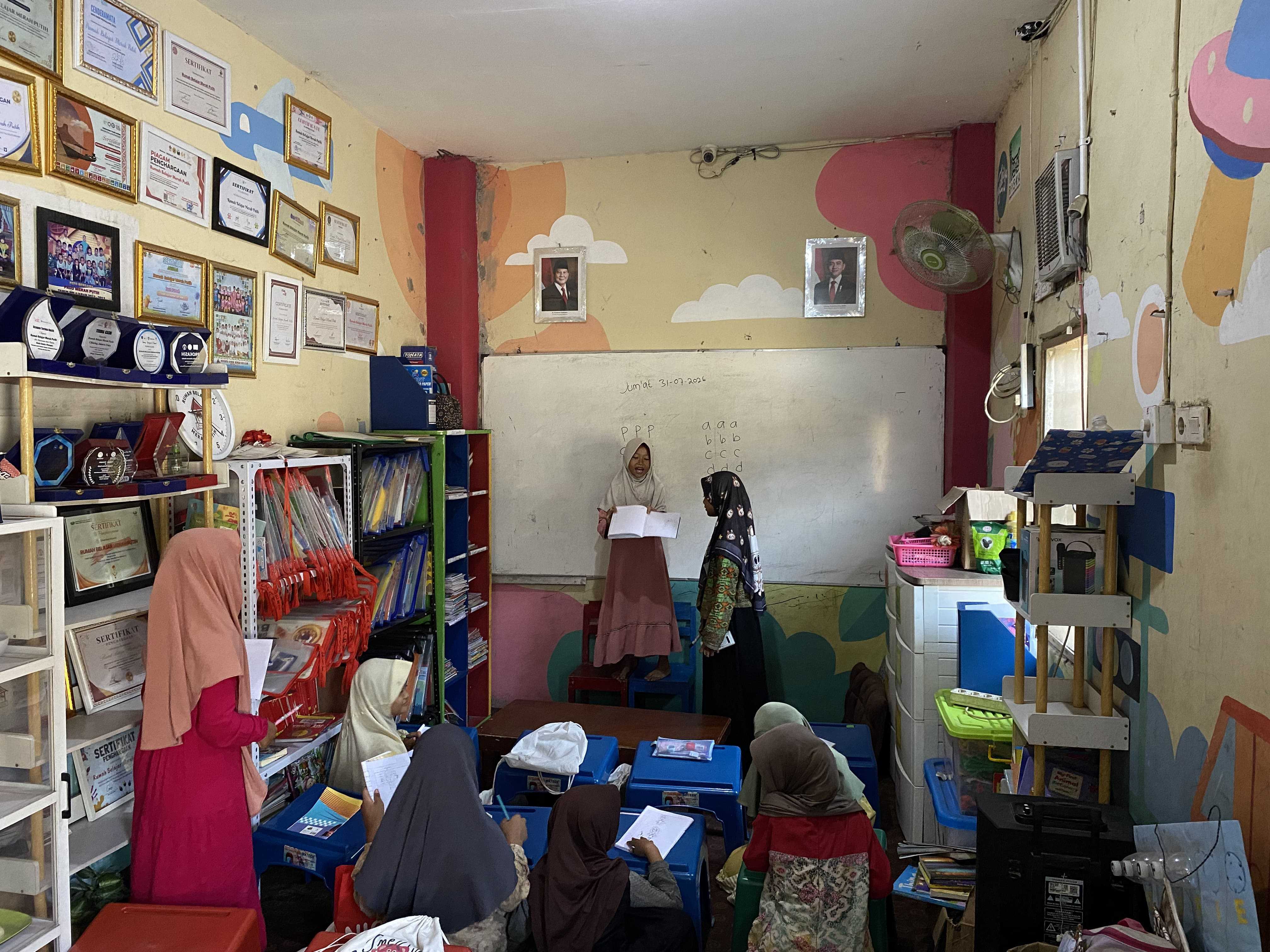
As midday approaches, heat intensifies inside the classroom at Rumah Belajar Merah Putih. On Sunday (Aug. 2), temperatures reached 33°C, although the heat felt even more intense. For children in Kampung Nelayan Kolong Jembatan Cilincing, the conditions do more than cause fatigue. They disrupt concentration, shorten playtime, and increase health risks.
“The weather is hot during the day, and it makes it difficult for me to concentrate on studying,” Nazwa, one of the students, said on Sunday (Aug. 2).
The impacts, however, are not the same for every child. According to UN Women, women and girls bear disproportionate impacts from climate change, compounded by gender inequality and social norms. As access to food, water, and fuel becomes more difficult, women often shoulder greater responsibility for meeting household needs.
That burden can also extend to girls. When household finances deteriorate or domestic responsibilities increase, they may be expected to help their mothers with household chores, care for family members, or meet daily needs while still being expected to study and participate in activities like other children.
Layered Vulnerabilities for Girls in Fishing Families
Climate crises can take an especially heavy toll on children in coastal communities, particularly girls. In Cilincing, many residents work as fishers, green mussel shuckers, or homemakers, with already limited incomes further strained by climate impacts.
The 2024 Gender Snapshot, citing UN Women, projects that by 2050, climate change could push up to 158 million more women and girls into poverty. It also estimates that 47.8 million more women than men could face food insecurity and hunger. Meanwhile, the 2025 UN Spotlight Report found that climate change is exacerbating social and economic pressures linked to violence against women and girls.
These challenges are also evident in Cilincing, North Jakarta. According to WALHI Indonesia, Statistics Indonesia (BPS) recorded 17.74 million people living in poverty in coastal areas in 2022, including 3.9 million classified as living in extreme poverty. The figure represented 68 percent of Indonesia’s 26.16 million poor people as of September that year.
Enos Ndapareda said extreme poverty can affect children’s access to education. When household finances become strained, fishing families may cut education-related expenses, with girls among those most vulnerable to being pulled out of school.
“Girls are the ones who are told to stay at home first. ‘Boys, you go to school,’ while girls are told to stay home. Because they think, ‘Well, girls will get married eventually; they will be married off to someone else,’” he said.
Limited access to education also intersects with child marriage. According to Rumah KitaB, at least 12–20 cases of child marriage were recorded in Cilincing between 2021 and 2023, with 25 cases recorded in Kalibaru Subdistrict. Data from the Religious Courts (Badilag, 2024) recorded 38 marriage-dispensation cases in North Jakarta, second only to East Jakarta, which recorded 50.
These vulnerabilities stem not only from economic pressures but also from gender norms. According to Enos, boys and girls experience climate impacts differently, with girls often shouldering greater domestic responsibilities because of entrenched patriarchal norms.
Physical and Reproductive Health Risks Threaten Girls
According to a UNICEF report (2021), around 600 million children worldwide are vulnerable to vector-borne diseases such as malaria and dengue fever. Indonesia ranks 46th among countries where children face high climate-related risks. Beyond these diseases, children may also be vulnerable to kidney disease amid extreme heat.
Jakarta is also experiencing rising temperatures. According to Jakarta’s Environmental Data, temperatures in built-up areas have increased by approximately 0.17–0.24°C, indicating a strengthening urban heat island effect. Rising temperatures, compounded by air pollution and flooding, increase health risks, including acute respiratory infections (ARI), which have reached approximately 997,320 cases.
During the reporting period, real-time data from AccuWeather showed temperatures in Cilincing reaching 33°C, with the feels-like temperature even higher. Suryani, a teacher at Rumah Belajar Merah Putih, said she had seen several students experiencing flu symptoms, coughs, and fever.
Taji, a documentation volunteer, reported similar observations. In recent weeks, he said, weekend attendance at the learning center had declined, partly because children were experiencing health problems amid the heat and dust.
“When they get sick, some of them don’t come. At first, there could be 40 to 50 children, but now there are fewer than 30 because of the heat and all the dust affecting their breathing,” he said.
For girls, climate-related health risks also intersect with menstrual health needs. UNICEF reported that nearly one in 10 adolescent girls aged 10–19 worldwide lacked access to basic drinking-water services in 2022. Another 121 million lacked basic sanitation, while 156 million lacked basic hygiene services. Such gaps can make it difficult for girls to manage menstruation safely, privately, and with dignity.
These challenges become more acute amid climate change. UNICEF warns that climate change can worsen access to water, sanitation, and hygiene, while rising temperatures and heatwaves threaten girls’ safety, learning, and development. Extreme heat, therefore, is not simply a physical health concern. When exposure to heat coincides with inadequate water, sanitation, hygiene, and facilities, girls face layered vulnerabilities.
Extreme Heat Undermines Children’s Concentration and Learning
Save the Children reported that at least 242 million students in 85 countries experienced education disruptions due to extreme heat, with many schools forced to close. In Indonesia, a UNICEF report (2024) found that at least 15 million children are exposed to heatwaves, which can reduce concentration and learning performance.
Climate-related hazards also threaten school infrastructure. UNICEF data show that 54,080 primary and secondary schools are located in flood-prone areas, while 15,597 are in landslide-prone areas. Between 2009 and 2018, 50,666 schools were affected by climate-related disasters.
At Rumah Belajar Merah Putih, the effects are visible in the classroom. Suryani, who teaches Quran reading activities for children and older residents, said the heat over the past two weeks had left children visibly more fatigued. Taji added that the heat trapped inside the classroom made them sleepy and less able to concentrate. Dust from heavy vehicles crossing the bridge further worsened the conditions and could affect their breathing.
“Dust from cars and container trucks comes straight in here, so the children start coughing easily,” Taji said on Sunday (Aug. 2).
Raya, 9, a second-grade student, said the classroom had become increasingly stuffy. She often felt thirsty during lessons and occasionally went to the kitchen for drinking water. Fani, 11, meanwhile, said she struggled to concentrate because of the heat.
Although temperatures reached 33°C that afternoon, some children still chose to play outside. Azka, 12, and Dimas, 13, sat tinkering with plastic toys under the scorching sun as vehicle dust filled the air. For Azka, the heat is even more noticeable at home, which is located near the Cilincing bridge.
“It’s hot because the bridge is right in front of my house. When the dust blows from the bridge, it comes straight into the front of our house,” said Azka, a seventh-grade junior high school student, while playing on Sunday (Aug. 2).
Enos Ndapareda, Humanitarian Manager at Plan International, said extreme heat affects more than children’s daily activities. It can reduce concentration, memory, and problem-solving abilities, ultimately affecting academic performance.
“Several studies have shown that high temperatures reduce concentration, memory, problem-solving abilities, and academic performance. Why? Because the room is simply too hot,” he said.
At Rumah Belajar Merah Putih, teachers and volunteers have taken simple measures to help children stay hydrated and maintain their concentration. They provide sufficient drinking water and remind children to wash their hands and faces after activities.
“Drink more water. Always have water available to drink. And don’t forget to maintain personal hygiene and wash your face. Dust contains a lot of dirt, and we’re worried that it could get into the body, or that they might forget to wash their hands before eating and it could get into their mouths,” Taji said.
Strengthening Protection, from Schools to Communities
As climate impacts intensify, adaptation needs to extend from the national level to local communities. According to Enos Ndapareda, existing disaster-management systems must be translated into concrete measures at the provincial, district, village, and community levels, reflecting the different risks faced by each area.
“The approach cannot be one-size-fits-all,” he said. Policies must also address groups often overlooked, including girls and children with disabilities. Early warning systems, for example, should be accessible to children with visual and hearing impairments.
Schools also need to prepare for rising temperatures. Enos said standards for school design and ventilation already exist, but ensuring their implementation remains a challenge. In coastal communities, adaptation should also include income diversification and gender-responsive social protection that involves women and children.
Penulis : Daffa Ulhaq
Editor : -
Tags
Berita Populer
#1
#2
#3
#4
#5
#6
#7
#8
#9
#10
Berita terkait

Pimpinan Pusat Ikatan Sarjana Nahdlatul Ulama (PP ISNU) memperingati Hari Ulang Tahun ke-26 dengan aksi filantrop...
CommunityKamis, 20 November 2025

Community – Sekelompok pemancing yang tergabung dalam Komunitas Mancing Aceh mengibarkan bendera Merah Putih di...
CommunitySenin, 11 Agustus 2025

Puan Bisa, sebuah komunitas berbasis pemberdayaan perempuan tahun ini kembali melaksanakan Puan Bisa Festival 202...
CommunityRabu, 22 Oktober 2025

Komunitas - Minggu kedua kegiatan akademik di University of California, Riverside (UCR) telah dimulai dengan sema...
CommunitySabtu, 16 Maret 2024

Comunity - Sebagai komunitas yang fokus pada pengembangan diri anak muda, Gensmart Indonesia terus melakukan aks...
CommunitySenin, 15 Juli 2024

Jakarta, 13 Juli 2026 — Sebanyak 1.500 peserta dari berbagai kalangan memadati area Rukun Festival 2026 pada M...
CommunitySelasa, 14 Juli 2026

Community – TEDxBandung 2024 hadir dengan tema “Kiwari”, memberikan refleksi mendalam tentang identitas dan...
CommunityJumat, 13 Desember 2024

Community - Sebagai komunitas yang fokus untuk berdedikasi dalam mendukung dan membimbing para remaja di seluruh ...
CommunitySelasa, 14 Mei 2024

Wacana pemberian makan bergizi gratis (MBG) bagi masyarakat adat Baduy menjadi perhatian publik. Program yang dig...
CommunityKamis, 13 November 2025

Komunitas -Youth Ranger Indonesia (YRI) tidak sekadar sebuah organisasi, melainkan sebuah gerakan yang menginspir...
CommunityRabu, 21 Februari 2024